Scary Hot Dogs Customers: Who to Serve and Skip
Scary Hot Dogs customers explained: normal regulars, intimidating visitors, crying women, masked intruders, and the tells that mean close the hatch.
The customers are the horror system in Scary Hot Dogs. The stand is the trap; the queue is what springs it. Some people at the window are tired locals who want a hot dog. Some are intimidating but harmless. Some are not people, and some are people who stop being people while you watch.
This page sorts the customer types by behaviour, not by appearance. That distinction matters because the game deliberately makes ordinary-looking visitors unsettling and strange-looking visitors polite. The monsters page→ covers the non-human creatures, and the weapons guide→ covers what to do when a customer turns hostile.
Quick answer
Serve anyone who orders, waits, pays, and leaves. Skip anyone who never orders, leans through the window, or stays after the interaction ends. Appearance is a warning, not a verdict.
The four customer reads
Most encounters fit one of four reads. You will not get a label on screen, so use the behaviour.
1. The normal regular
They order a hot dog, maybe a drink, wait for it, pay, and leave. They may be rude, tired, or strange-looking, but they follow the customer script. The sheriff-like customer in the official screenshots is the clearest example: badge, hat, cash in hand, hot dog in the other hand. He is not a threat.
Serve these customers quickly. They fund the shop and keep the shift moving. Do not skip a paying customer because they look odd. The money guide→ depends on this queue.
2. The intimidating local
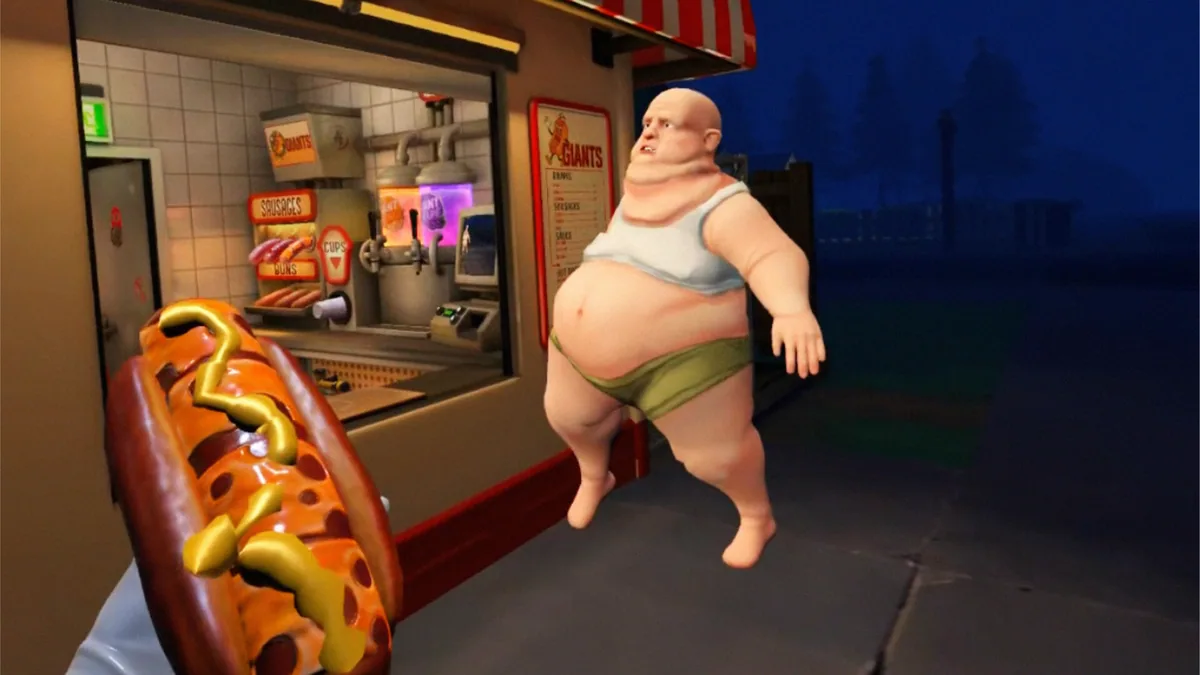
The large customer in a white tank top is the best example. He fills the window, blocks the light, and looks like he could fold the stand in half. In the official screenshot he is just standing there. In another frame, a similar customer is at the menu board. There is no evidence that size equals hostility.
Treat him like a normal customer until he stops behaving like one. If he orders, serve him. If he leans through the window and never orders, close the hatch. Do not start a fight with someone who has not broken the script.
3. The distressed visitor
The barefoot woman in the black dress, crying with her face in her hands, is one of the most memorable images in the mobile build. She looks human and vulnerable. That is exactly why she is dangerous to read. A crying customer may be a person who needs help, or a lure with a human shape.
The safe play is to keep the window between you and her. Ask for the order by waiting on the ticket. If no ticket appears, use the skip button. Do not step outside to comfort her. The stand is your armour; the car park is not.
4. The wrong customer
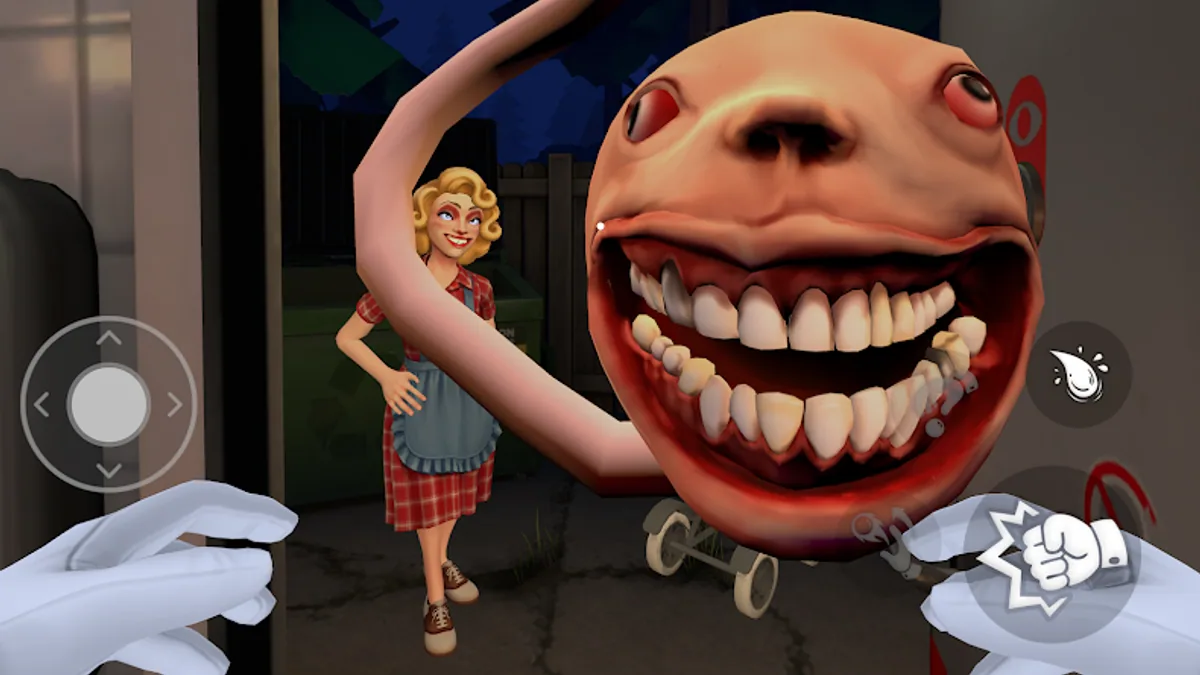
The masked intruder in the striped shirt and purple face is the clearest "do not serve" design. He leans through the window, reaches into the stand, and does not follow the order script. The animatronic bear with glowing eyes is another obvious wrong customer. So is the pale, long-faced entity that presses a hand against the glass.
These are not difficult reads. The difficult part is reacting fast enough. The skip button closes the hatch. The red button closes the shutters. Use one of them before you reach for a weapon.
A visitor who never speaks a ticket is not a slow customer. Give them a second, then close the hatch. Standing at the window while you decide is how you get grabbed.
Behaviour tells that matter
The game does not give you a scanner, so you have to watch the animation. These are the tells that show up across the public footage:
- No ticket: the visitor stands at the window but no order appears. Treat as hostile.
- Leaning in: the body crosses the plane of the window. Close the hatch.
- Silent staring: the visitor does not speak, blink, or react to the menu. Do not mirror the stare.
- Following you: the visitor moves along the glass when you move inside. That is not a customer waiting for ketchup.
- Changing shape: the body distorts, the face opens, or the silhouette stops matching the person. This is the point to retreat.
- Carrying a weapon: some customers arrive armed. Keep the counter between you and do not turn your back.
The official copy promises "bizarre and terrifying customers" and "unexpected events." The tells are the game's way of making those events readable. If you cannot read them yet, serve the obvious orders and skip the obvious threats.
Who not to mess with
The customers you should never provoke are the ones that are already inside the stand's space. The masked intruder, the animatronic bear, and the long-faced entity are not waiting for a hot dog. They are testing the window.
Do not try to serve them a decoy order. Do not open the hatch to get a better look. Do not walk around the counter to confront them. Close the window, check the camera, and put a tool between you and the glass. The weapons guide→ explains which tool to buy for which range.
The other group you should not provoke is the armed human customer. Some visitors carry their own weapon. A polite handoff is cheaper than a fight. If the ticket is normal, serve it and let them leave.
When to skip and when to close the shutters
The skip button ends the interaction. The shutters close the whole window. They are different tools.
- Skip when the visitor is at the window but has no ticket, or when the order is clearly wrong and you want the interaction gone.
- Shutters when something is already moving toward the stand, when the window is breached, or when you need to leave the counter to fix the power.
- Weapon when the visitor is inside and the window is no longer between you.
Do not use the shutters as a default. Closing them stops orders, and no orders means no money. The night one guide→ explains the order-first rule.
Customer types and the ending
Reviewers confirm multiple endings, and the customer choices are one of the obvious levers. Serving every normal customer, skipping every hostile one, and keeping the stand open may lead to one route. Refusing everyone, or letting the stand fail, may lead to another. The game does not publish an official ending chart.
That is why the endings guide→ separates confirmed facts from theories. The safe approach is to play consistently: decide what kind of stand you are running, and stick to it. A run where you serve everyone and a run where you trust no one are both valid experiments.
FAQ
Can I serve the masked customer?
You can try, but public footage shows him reaching through the window rather than ordering. The safer play is to close the hatch and skip the interaction.
Is the big customer in the tank top dangerous?
Not automatically. He is intimidating, but the official screenshots show him as a customer at the window and at the menu board. Serve him if he orders. React only if he breaks the script.
What does the crying woman want?
The footage does not show a clear order. Treat her as a distressed visitor and keep the window closed until a ticket appears. Do not leave the stand to help her.
Do customers remember if I skip them?
The game does not publish a reputation system. The immediate cost of a skip is the lost sale. Whether it affects later events is not confirmed.
Official source: Scary Hot Dogs on Steam ↗ and PlayStation Store PPSA40470 ↗ Community source: VR Cricket Guy launch breakdown ↗ and Game Critix review ↗ Inference source: the four customer reads and the skip-versus-shutters guidance are editorial, based on visible behaviour in public footage.